Inspired Living
Induction Cooktop Care 101: Keeping Your Induction Cooktop Spotless

Last updated: 16 June 2026
An induction cooktop is one of the quieter pleasures of a well-designed kitchen. The surface stays composed, heat responds instantly, and most clean-ups are a matter of a damp cloth rather than a scrubbing session. That said, induction glass has its own rules. The wrong cleaner, a pan slid instead of lifted, or a few days of ignored splatters will dull the surface faster than you'd expect.
This guide covers how to clean an induction cooktop the right way, the habits that keep an induction stove top spotless long-term, and the cleaning products you can trust.
Skip to
The appeal of an induction cooktop isn't only the precision, it's the surface. Because heat is generated in the pan rather than the cooktop itself, the glass stays relatively cool around the cooking zone. Food is less likely to bake on, and there are no burners, grates or drip trays to pull apart.
Still, induction glass-ceramic is not invincible. Sugar, aluminium streaks, hard-water residue and the wrong scraper can each leave their own signature on the surface. The difference between a cooktop that looks new after five years and one that looks tired after one comes down to a handful of small habits.
The best induction cooktop care is preventative rather than remedial. A quick wipe after every use does more than any monthly deep clean.
Let the surface cool, then wipe with a soft damp microfibre cloth. Even a warm surface can cause splashes to set into the glass.
Dry the cooktop with a clean cloth afterwards to prevent streaks and water spots.
Deal with sugary spills like jam, caramel and sweetened sauces while the cooktop is still warm but safe to touch. Sugar cooled onto the glass can leave a permanent pit.
Keep heavy cookware off the surface when it's not in use. A cast-iron pan resting overnight is asking for a scratch.
Make sure the base of every pan is clean before it goes on the cooktop. Grit trapped between pan and glass acts like sandpaper under heat.
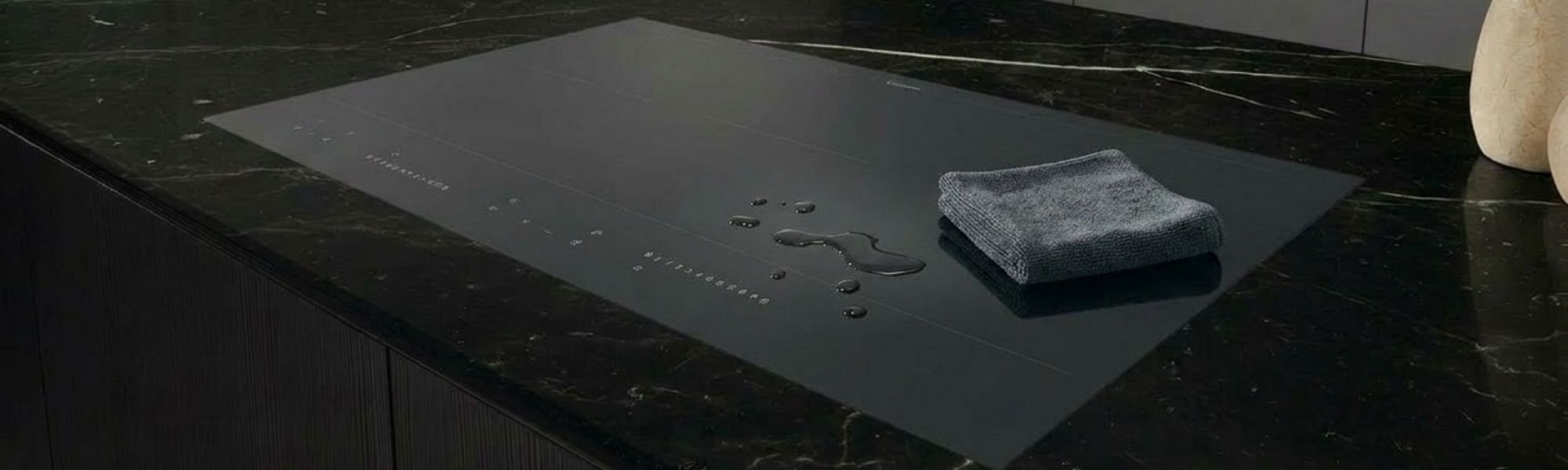
For a standard clean, daily or after cooking, this is the sequence we recommend:
Turn the cooktop off and wait until the surface is cool to the touch. The 'hot' indicator will stay lit until it's safe.
Wipe away loose crumbs and splatter with a soft damp cloth.
Apply a few drops of a specialised induction cooktop cleaner or a paste of bicarb soda and water for a more natural option.
Work the cleaner gently across the glass with a soft sponge or microfibre cloth. Don't scrub.
Wipe off all residue with a clean damp cloth, then buff dry with a fresh microfibre.
For burnt-on food, use a dedicated induction cooktop scraper at a shallow 10-15 degree angle to lift the residue before cleaning. Never use a kitchen knife.
Most Australian homes settle on one of three approaches, often using all three for different jobs.
Specialised cooktop cream
Hillmark Cerapol is the most popular cooktop cleaner in Australian kitchens. It is available in supermarkets and appliance retailers, formulated for ceramic and induction glass, and leaves a light protective film that helps the next clean go faster. A small amount on a soft cloth is more than enough for a standard cooktop.
Bicarb soda and water paste
Gentle, inexpensive and genuinely effective for most everyday messes. Mix enough bicarb with water to form a thick paste, spread it over the affected area, leave for five minutes, then wipe with a damp cloth. A good option for those who prefer to keep harsher chemicals out of the kitchen.
White vinegar
Best reserved for hard-water marks and the cloudy film that can build up in water-hard areas. A 50/50 solution with water, applied with a cloth and left for a few minutes, will dissolve most mineral deposits. Follow with a plain water wipe and a dry buff.
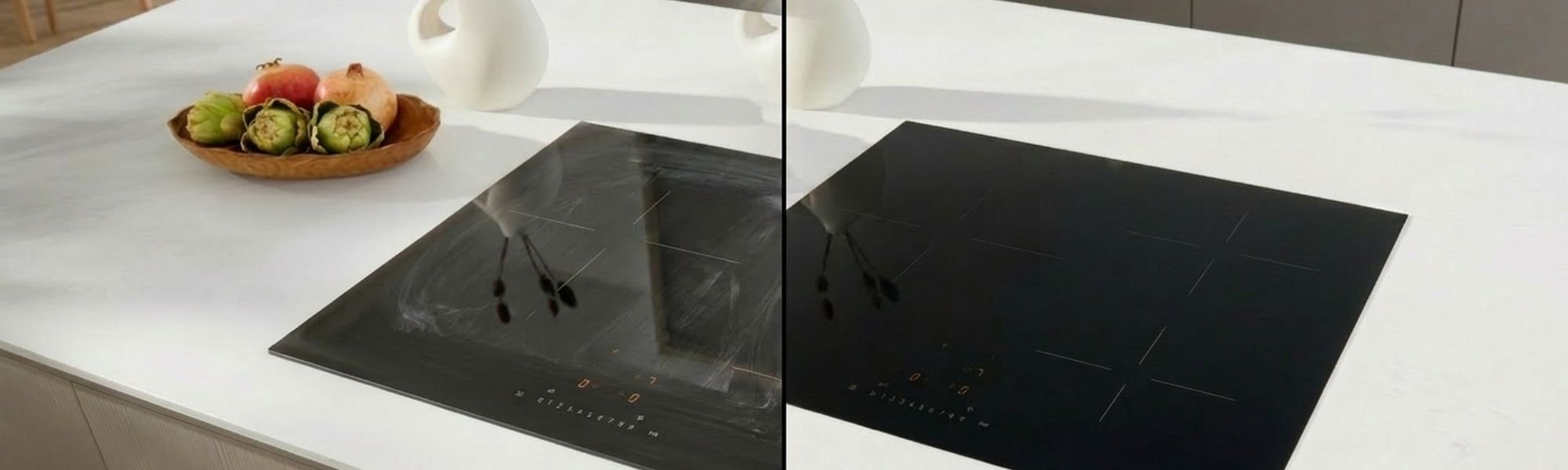
Marks are the question we're asked about most often. Most fall into one of four categories, and each has its own fix.
White marks and limescale
Caused by mineral residue from hard water, common in parts of Adelaide, Perth and regional areas. A white vinegar and water solution dissolves them. Apply with a cloth, leave for five minutes, wipe clean and buff dry.
Cloudy marks and residue film
Usually the result of cleaner build-up, water spots or food residues heated onto the glass over time. A specialised polish will typically lift them in one or two passes. If the cloudiness persists, switch to a vinegar rinse first to cut through any mineral layer underneath.
Burnt-on residue
Use a dedicated induction cooktop scraper, held almost flat against the surface, to lift the crust before applying any cleaner. Then treat with cream cleaner and a soft cloth. For heavy stains, repeat the process rather than scrubbing harder.
Aluminium and metal marks
The thin silver streaks that appear when cookware has been dragged across the glass. A specialised cooktop cleaner will usually remove them. Persistent marks may need a second application, left on slightly longer.
Lift pans, don't slide them. The single most important habit for induction longevity.
Check the base of your cookware for burrs, rough edges or trapped grit. Any one of these can scratch the glass.
Don't cook with stray salt or sand on the surface. It acts like sandpaper beneath a hot pan.
Avoid using the cooktop as a workbench. A dropped jar or utensil can crack the glass.
If your cooktop does crack, turn it off at the mains and book a service call before using it again. A cracked surface is a safety issue, not a cosmetic one.
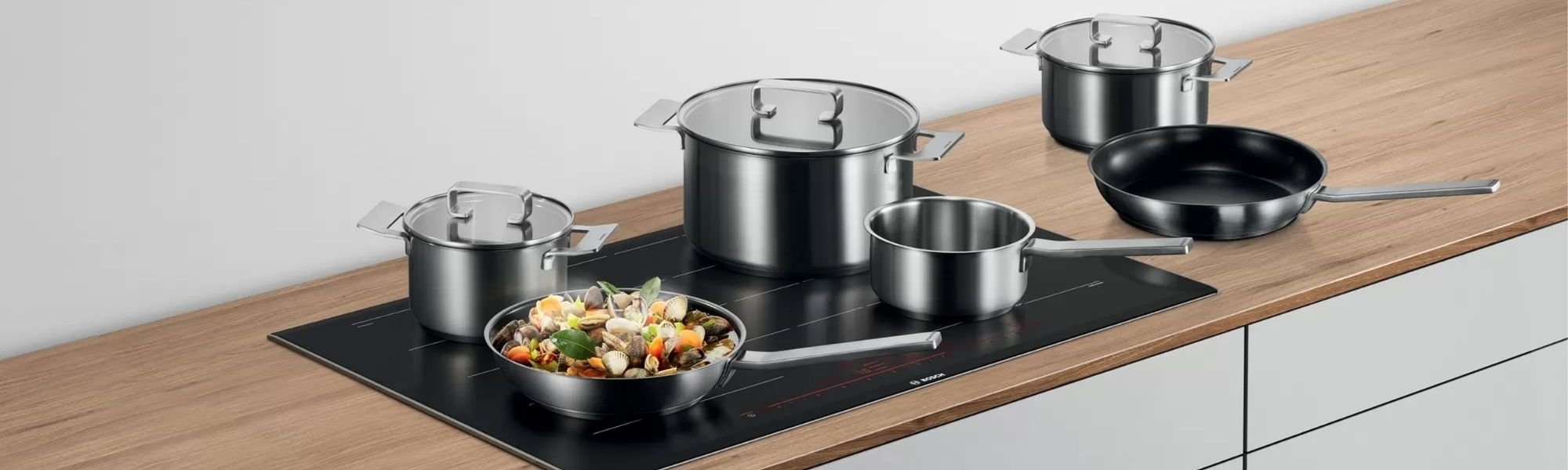
Induction relies on magnetism, so not every pan will work. A quick magnet test is the fastest way to check: if a magnet sticks firmly to the base of the pan, it's induction-compatible.
Flat-bottomed stainless steel and enamelled cast iron are the safest everyday choices.
Raw cast iron works but needs care. Rough bases can scratch the glass. A smooth-bottomed model is worth the investment.
Avoid copper, aluminium and glass cookware unless a piece is specifically labelled induction-compatible.
Match pan base size to the cooking zone as closely as possible. A pan too small for the zone heats unevenly and wastes energy.
Some cleaners and tools will damage induction glass over time, even when the first use seems harmless. Keep all of these away from the surface:
Steel wool or abrasive scouring pads
Scouring powders
Bleach or ammonia-based cleaners
Oven cleaner
Knife blades or household scrapers - only a purpose-made cooktop scraper is safe
Large amounts of water or liquid cleaner sprayed directly onto the control panel, which can seep into the electronics
See It in Person
An induction cooktop is best understood in the showroom. The feel of the glass, the response time, the way the surface sits within the cabinetry - these are the things specifications can't convey. Signature Appliances' specialists can walk you through the range, talk through care and cookware, and help you choose a model that suits the way you actually cook.
Visit one of our showrooms or book an appointment to see the full induction range and speak with someone who knows the products inside out.
A soft microfibre cloth with warm water and a mild dish soap handles daily cleaning. For stubborn marks, use a dedicated induction cooktop cream or a paste of bicarb soda and water. White vinegar works well on hard-water deposits.
Wait for the surface to cool, wipe away loose debris, then apply a small amount of specialised cooktop cleaner or bicarb soda paste. Work gently with a soft sponge, wipe off with a damp cloth and buff dry with a microfibre cloth. Use a purpose-made scraper for any burnt-on residue.
Allow the surface to cool to just warm, then hold a dedicated cooktop scraper at a shallow angle and lift the burnt residue. Apply a cream cleaner such as Cerapol to any remaining mark, leave for a few minutes and wipe clean. For heavy stains, repeat rather than scrubbing harder.
White marks are usually mineral deposits from hard water, or dried-on cleaning residue. A white vinegar and water solution will dissolve most of them. Persistent marks often respond to a specialist cooktop polish like Cerapol.
Yes. A paste of bicarb soda and water is a gentle, effective cleaner for most everyday messes on induction. Leave it on the surface for a few minutes, wipe with a damp cloth and buff dry.
Yes. Cerapol is formulated specifically for ceramic and induction glass surfaces, and it's one of the most widely used cooktop cleaners in Australian kitchens. Apply a small amount, work it gently across the glass and buff off with a clean cloth.
Yes, but only a scraper designed for cooktops. Keep the blade almost flat against the glass - 10 to 15 degrees is the right angle - and work gently. Never use a kitchen knife or a household paint scraper.
Modern pacemakers are generally well shielded against interference from induction cooking, but the accepted guidance is to keep a distance of around 60cm from the cooktop while it's running. If you have a pacemaker, speak with your cardiologist for advice specific to your device.
Steel wool, abrasive pads, scouring powders, bleach, ammonia-based cleaners and oven cleaner. All of these can dull or pit the glass. Avoid using a kitchen knife as a scraper, and keep liquids away from the control panel.
Have more questions about induction cooktop care? Book an appointment with one of our specialists to discuss further.