Inspired Living
The Invisible Kitchen: A Complete Guide to Integrated Fridges

Last updated: 15 June 2026
If you’re planning to update your fridge, or your entire kitchen, integrated refrigeration deserves serious consideration. As clutter-free design continues to shape premium interiors, more homeowners are choosing to conceal essential appliances behind custom cabinetry. The result is a seamless, considered aesthetic that lets the kitchen's architecture take centre stage.
Skip to
An integrated fridge is a refrigerator specifically designed to be hidden behind kitchen cabinetry. You may also see them referred to as built-in or panel-ready refrigerators - the terms are often used interchangeably, though "panel-ready" specifically indicates the door accepts a custom panel. Because precise alignment with cabinetry is essential, professional installation is recommended.
If you're weighing up an integrated fridge against a regular freestanding model, the right choice depends on what matters most to you: aesthetics, installation or long-term value. Here's how they compare.
| Integrated fridge | Freestanding fridge | |
|---|---|---|
| Appearance | An integrated fridge adds an elegant, contemporary feel to a kitchen. Its seamless, elevated appeal makes it a popular choice in designer kitchens with a minimalist aesthetic. | A freestanding fridge becomes a visible feature in the kitchen, making it a strong choice if you want the appliance to serve as a design statement. |
| Cabinetry integration | Integrated fridges require specific cabinetry integration as they will be installed flush with your kitchen cabinetry, using the same panels/doors that feature throughout the space. | A freestanding fridge offers a little more flexibility as it can be simply unplugged and removed if needed – there's no cabinetry integration required. |
| Ventilation | Integrated fridges require proper ventilation. When the fridge is installed, a minimum of 200cm² at both the bottom and top of the cabinetry is required to ensure air can flow around the fridge. | Ventilation is also important for freestanding fridges. These fridges also require 200cm² around the top, bottom and sides to ensure safe airflow. |
| Price point | Integrated fridges typically represent a higher investment due to installation and custom cabinetry costs. | Freestanding fridges can be a more budget-friendly choice as they don't require installation or customisation. |
| Installation requirements | Integrated fridges need to be professionally installed. | Freestanding fridges don't require professional installation. |
| Longevity and resale value | Integrated fridges can be harder to resell due to custom sizing, but they typically carry longer warranties (often five to ten years) and are built for longevity. | Freestanding fridges can be more readily resold and come with warranties typically between two and five years. |
Terminology in refrigeration can be confusing, so here's what each style actually means:
| Fully Integrated | Semi-Integrated | Built-Under |
|---|---|---|
| The entire unit sits behind a cabinet panel. This style is typically specified in luxury kitchens where a completely seamless look is the priority. | The fridge is panel-fronted, but the control panel or digital display remains visible. This allows easier access to settings but breaks the invisible aesthetic. | Compact units designed to fit beneath a standard 900mm benchtop, venting through the kickboard. A practical choice for bar areas or butler's pantries. |
Integrated fridges are incredibly popular in contemporary design, but it’s worth considering whether they’re right for you and your home. For most high-end kitchens, an integrated fridge is the right choice because it eliminates the visual break caused by large appliances. Beyond aesthetics, these units are often built to a higher mechanical standard. Premium brands engineer integrated models to last 15 to 20 years, significantly longer than the average freestanding unit.
Choose an integrated fridge if:
You want a minimalist, handle-less, or furniture-style kitchen.
You are planning custom cabinetry and want a flush, seamless finish.
You prefer appliances that offer long-term durability over a lower upfront price.
The disadvantages of an integrated fridge: what to weigh up
While the design benefits are clear, there are practical trade-offs every homeowner should understand.
Lower Storage Capacity: To sit flush with 600mm deep cabinets, the fridge body is shallower than a standard model. You may lose up to 20% of the internal volume compared to a freestanding French Door fridge.
Precision Installation: These units are not "plug and play." They require a specialist installer and a skilled cabinet maker to ensure the doors align perfectly. If the floor isn't level or the joinery is slightly off, the fridge may not seal correctly.
Replacement Difficulty: Integrated fridges are built into your kitchen's "skeleton". Replacing one down the line often means finding a unit with the exact same dimensions, or you risk having to redo your cabinet panels.
At Signature Appliances, we help clients navigate these decisions daily. If you've decided an integrated fridge is right for you, here are a few additional factors to consider.
Are columns for you?
While some integrated models combine fridge and freezer in a single unit, column configurations have become increasingly popular in luxury kitchens, separating fridge, freezer and wine storage into individual units. This allows for more precise temperature control and advanced cooling technology, though it typically requires a higher investment.
Do you want fixed or sliding hinges?
Door-on-door (fixed) hinges are the premium standard, where the cabinet panel attaches directly to the fridge door so both move as one. Sliding hinges, typically found on entry-level units, use guide rails that allow the cabinet panel and fridge door to move independently. Fixed hinges offer a more seamless feel and tend to be more durable over time.
Key features worth considering
Higher-end integrated fridges often feature dual-compressor technology, which provides more stable temperatures across zones and offers redundancy if one compressor fails. You may also find models with dedicated climate-controlled compartments for fruit and vegetables, meat, and dairy, which is worth considering if precise food storage matters to you.
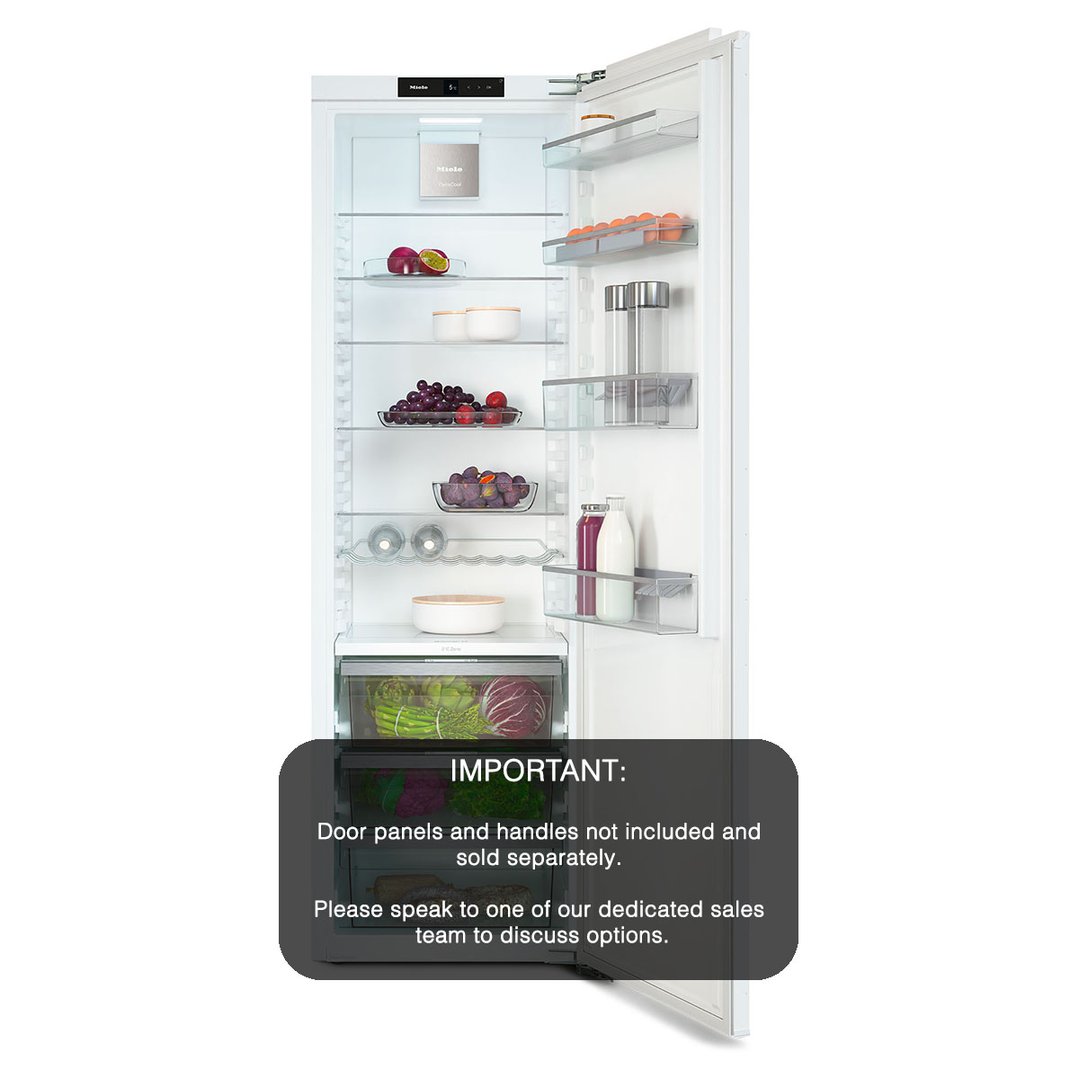
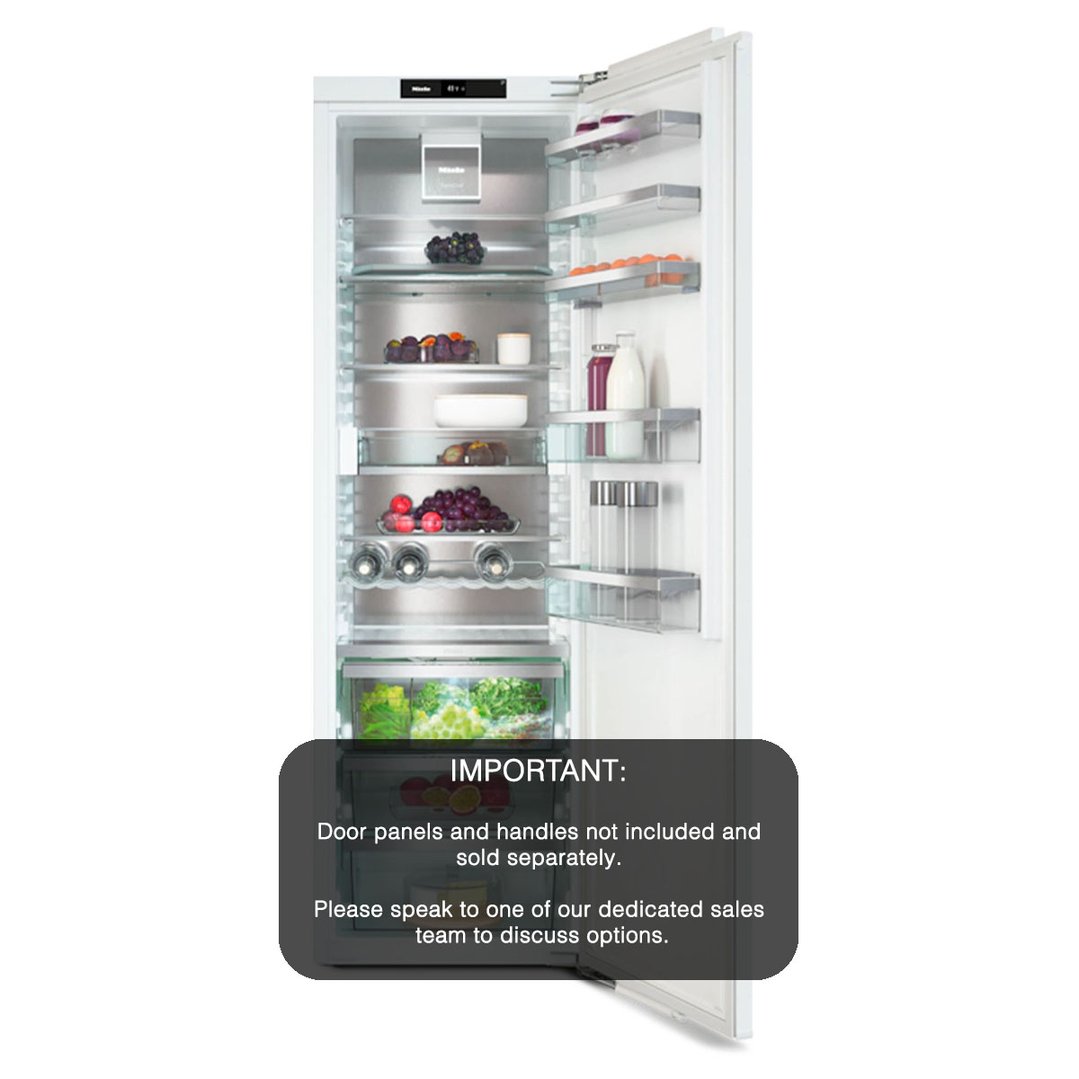
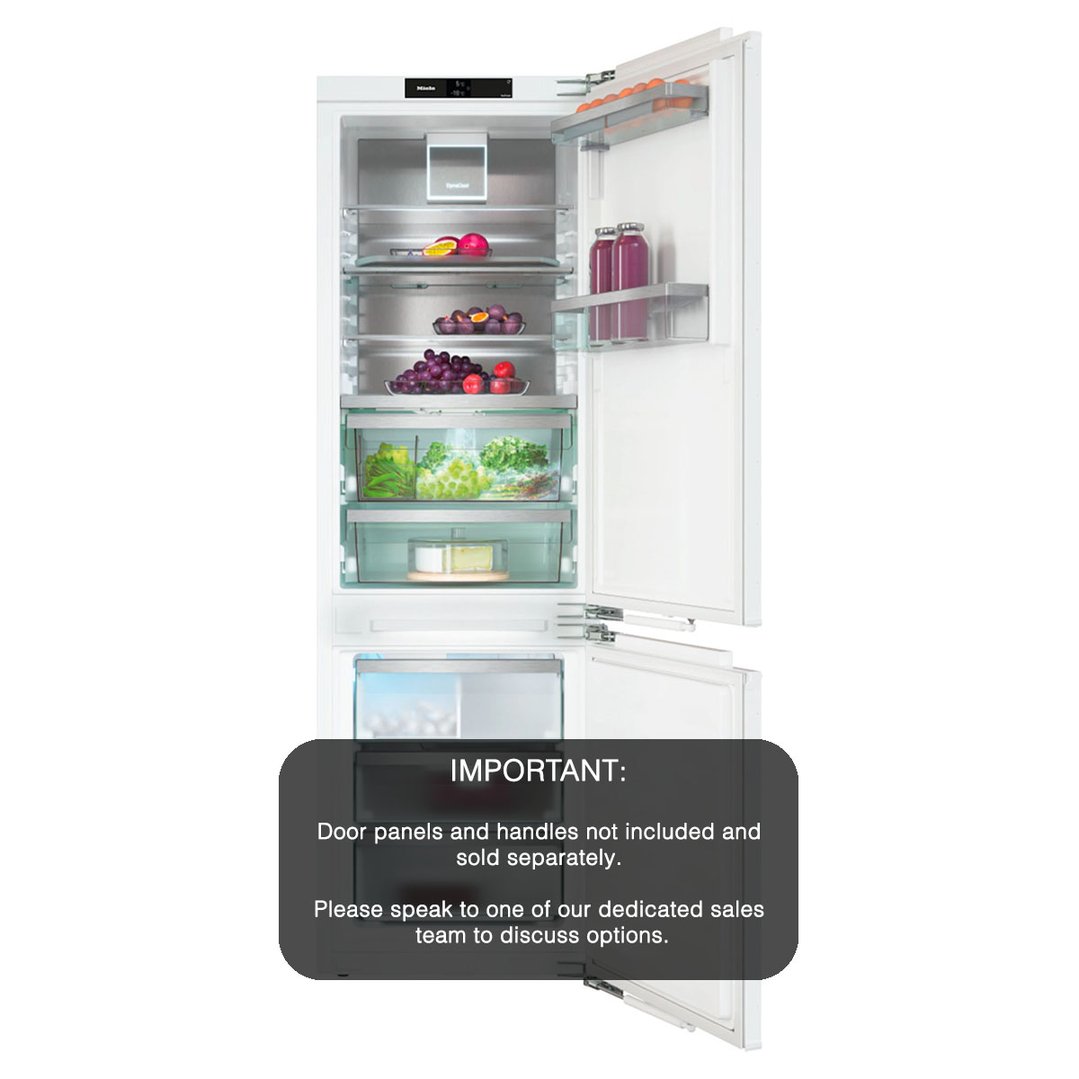
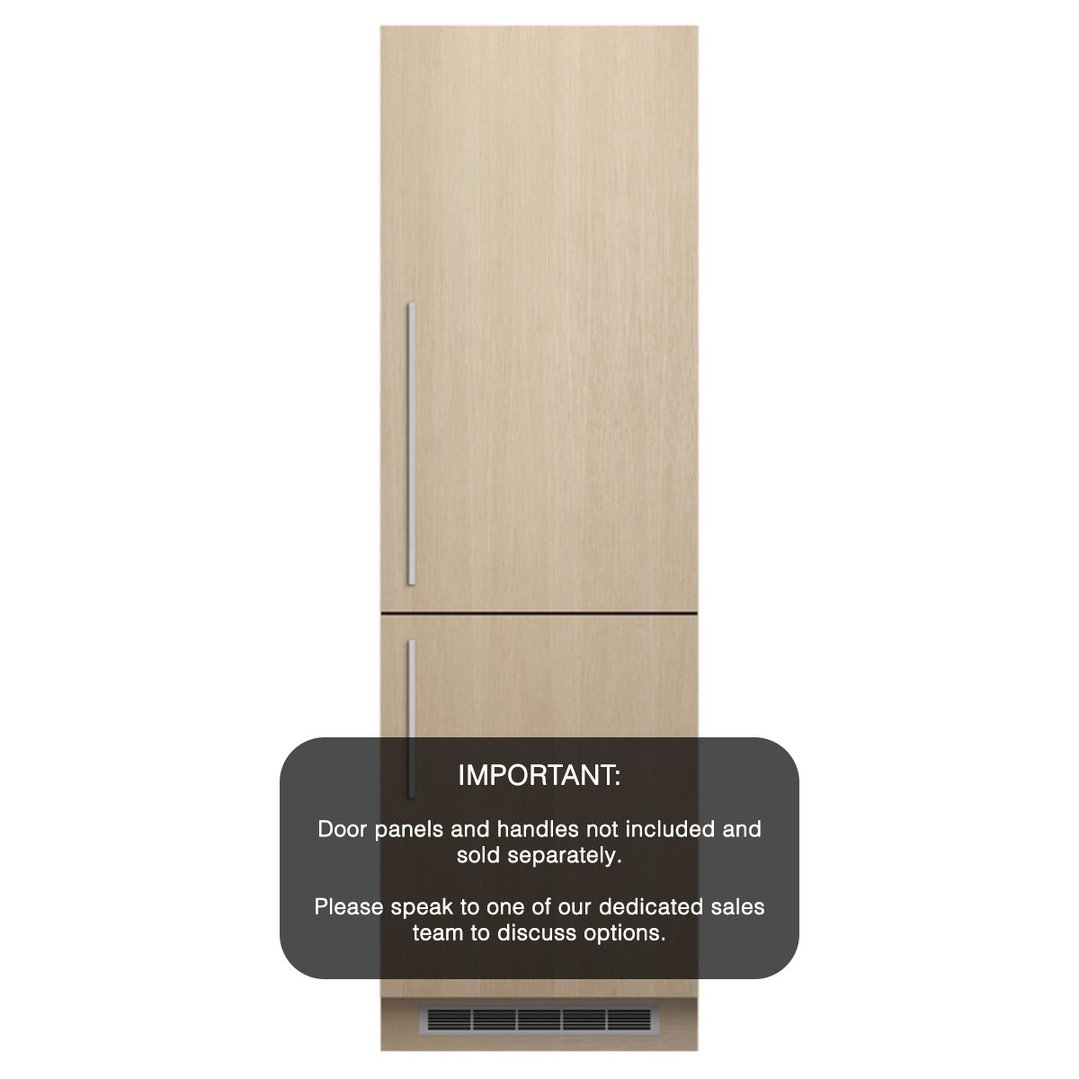
Explore our integrated fridge range







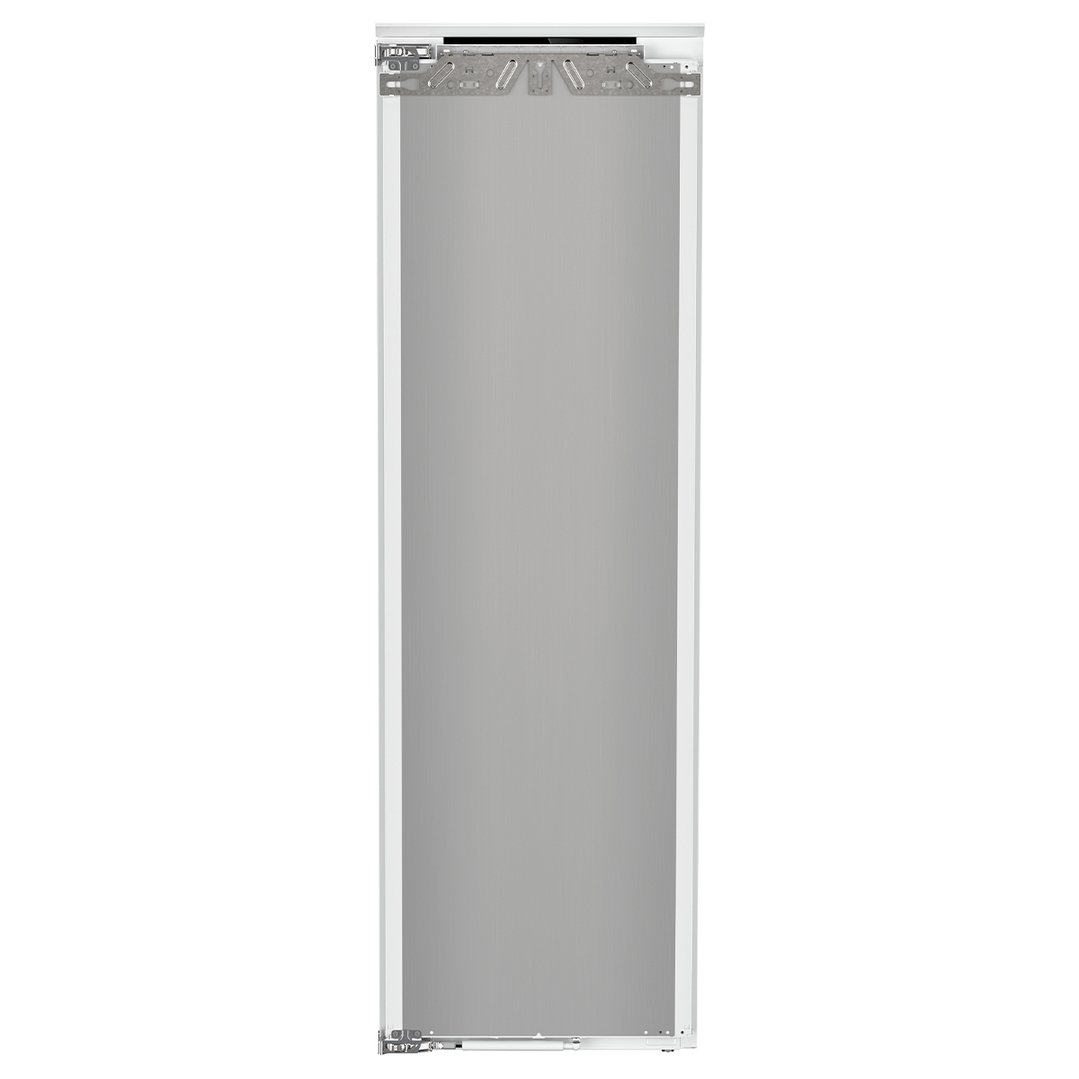
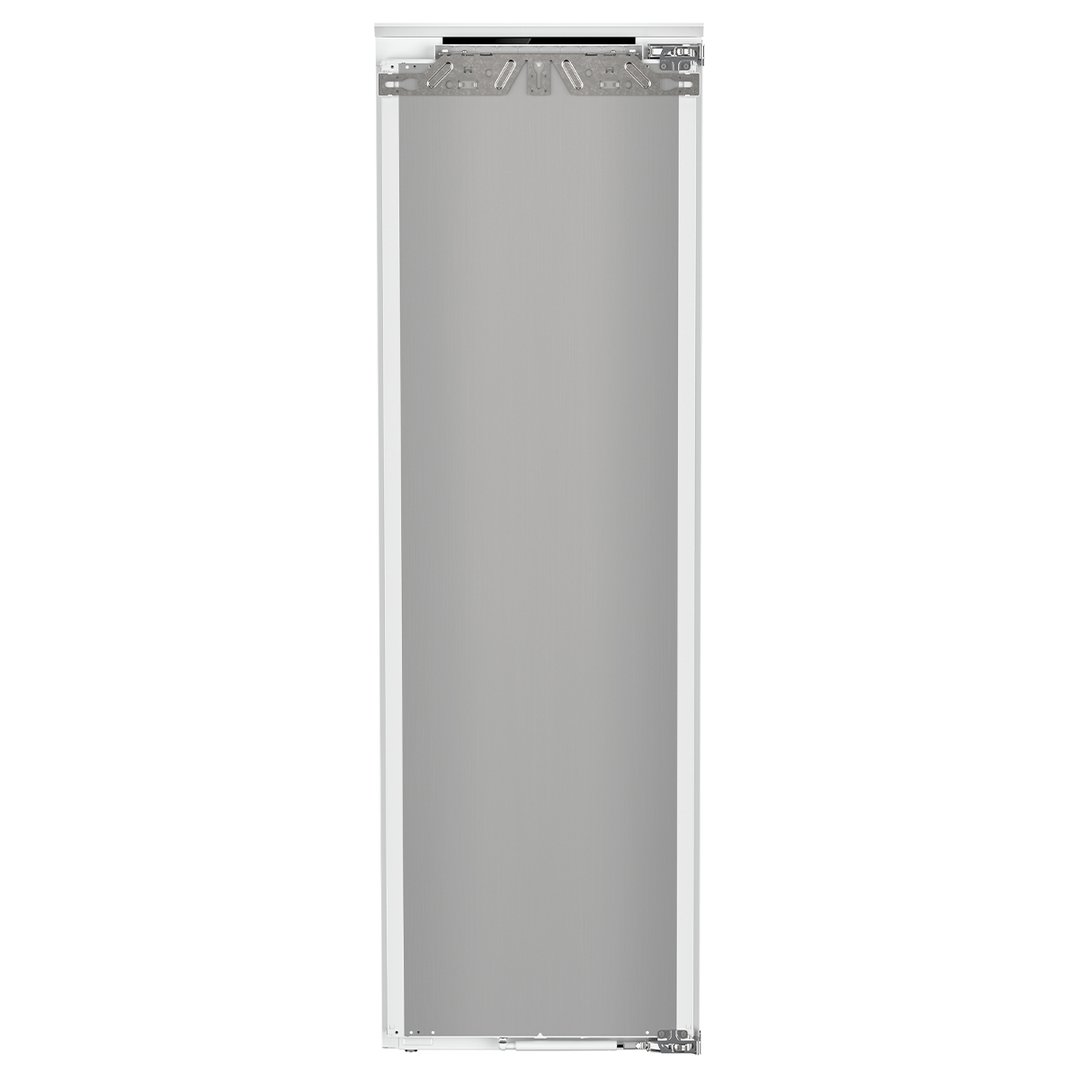
Ahead of the installation of your integrated fridge, be sure to check the following:
1. Confirm cabinetry dimensions
Precise measurements are non-negotiable. Ensure you have accurate dimensions for all cabinetry so the fridge sits flush with no gaps or misalignment.
2. Verify ventilation path
Keep in mind the required minimum of 200cm² airflow around all refrigerators and ensure you’ve allowed enough room for safe airflow.
3. Strategic service placement
Make sure there are no powerpoints or water outlets directly behind the integrated fridge.
4. Level and reinforce the floor
The floor must be level beneath your refrigerator to avoid cooling inefficiencies. For integrated fridges upwards of 400kg, you'll also need to reinforce the floor to support the weight, particularly if the unit sits on carpet or a floating floor.
5. Coordinate panel templates
Request drilling templates from the manufacturer before installation. These guides ensure your cabinet maker positions handle holes and fixings precisely, avoiding costly mistakes.
If you’re still weighing up whether an integrated refrigerator is right for you, Signature Appliances' specialists can help. Book an appointment, or visit one of our showrooms to see the full range and speak with an expert who can guide you to the right fit for your kitchen and lifestyle.
No. Integrated fridges are specifically engineered with shallower depths, ventilation requirements and hinge systems designed for cabinetry installation. A standard freestanding fridge cannot be retrofitted.
Premium integrated fridges are built for longevity, with many models lasting 15 to 20 years. Warranties typically extend beyond five years, with some brands offering up to ten.
Replacing an integrated fridge is more complex than replacing a freestanding fridge because it is built into your kitchen cabinetry. Some integrated fridges also require longer lead times to deliver, so it's worth planning ahead.
Integrated fridges are more expensive than freestanding fridges because they are more customisable, are integrated into the kitchen cabinetry and require professional installation. They often incorporate more advanced preservation technology and come with extended warranties.
Have more questions about integrated fridges? Book an appointment with one of our specialists.